
Total Knee Replacement
The knee is a hinge joint. It is complex structure made of three bones: bottom of the thigh bone (femur), top of the shin bone (tibia) and the kneecap (patella).
The bones are held together by ligaments, muscles and tendons.
They have a complex relationship with each other to allow a full range of movement and ensure stability during activities. Total knee replacement involves replacing the joint between the femur and tibia. In select patients the patella may also be replaced. The need for this assessed during your operation.
There are three aspects of the new joint which are of importance :

Fixation
The new implants are fixed into the bone in one of two ways. They can be cemented; using bone cement which secures the implants in the bone by acting like a combination of glue and grout. The alternative method relies on the surface finish of the implants (uncemented) which encourages your own bone to grow onto the implant securing it in place. Both methods are safe and have long term data to support their use.

Size
The size of the joint is assessed during surgery and the most appropriate size to allow stability and movement used.

Joint Sufaces
Movement occurs between the femoral implant, which is made of metal, and the plastic insert attached to the tibial implant.
The results of TKR are excellent. People have significant pain relief and restoration of function.
Typically, patients are able to return to their jobs and other leisure activities, including golf, skiing, racket sports and cycling.
Your suitability for a TKR will be determined as a joint decision with your surgeon. This will depend on your symptoms, expectations and examination findings. An X-ray examination is an essential part of your assessment.
Indications
TKR is a highly successful procedure with a high rate of patient satisfaction.
The indication for the surgery is severe pain that limits desired activities, and which has failed to respond to non-surgical treatments such as weight loss, pain killers and physiotherapy.
The commonest cause for this is osteoarthritis. Other causes include Rheumatoid arthritis, damage to the joint due to previous trauma and avascular necrosis.
People with severe stiffness, severe bone loss or severe deformity may be advised to consider surgery sooner rather than later. This can be discussed with your surgeon during the outpatient clinic.
Complications
TKR is a very safe procedure, but as with any surgery there are risks.
These include :
Implant loosening and wear over time.
Damage to nerves and blood vessels.
Your Journey to a Total Knee Replacement
Here are the steps to complete Total Knee Replacement

Outpatient Appointment
This is the first time you will meet your surgeon. You may or may not require a referral from your NHS GP depending on how you choose to fund your treatment.
Your surgeon will go through your symptoms and expectations and examine you to assess your suitability for a TKR.
At this stage an X-Ray examination of your joint will be needed to assess the severity of the wear in your joint. This also allows your surgeon to determine the size and type of TKR most appropriate for your knee.
Rarely further tests such as injection or CT and MRI scans may be needed.
Usually, a decision on whether a TKR is the best way of treating your painful knee will be made in this first outpatient appointment.
Pre-Assessment
If a joint decision is made to proceed with a TKR, your general health will be assessed in a special pre-assessment clinic. This special clinic is led and reviewed by an anaesthetist.
Here, you will have some routine blood tests, assessment of your heart (ECG) and a review of your medication. You will be advised about the management of your medication around the time of your surgery.
Admission
You will be admitted onto the ward on the day of your operation.
Your surgeon will go through the procedure, consent you for the operation and put a mark on your leg to ensure that the correct knee is operated on. You will also be seen by the anaesthetist of the day.
Anaesthetic
TKR is carried out using anaesthesia.
Vast majority of patients have Regional Anaesthesia which involves an injection into the back (Spinal Anaesthetic). You will also have a sedative. This means that you will not be aware of anything during surgery. You will not hear, feel or smell anything. Spinal anaesthetic is by far the safest way of having surgery and reduces the risks of bleeding, developing blood clots and provides excellent pain relief following surgery.
Most patients find the prospect of a spinal anaesthetic scary, but are very satisfied with it after the event.
The Operation
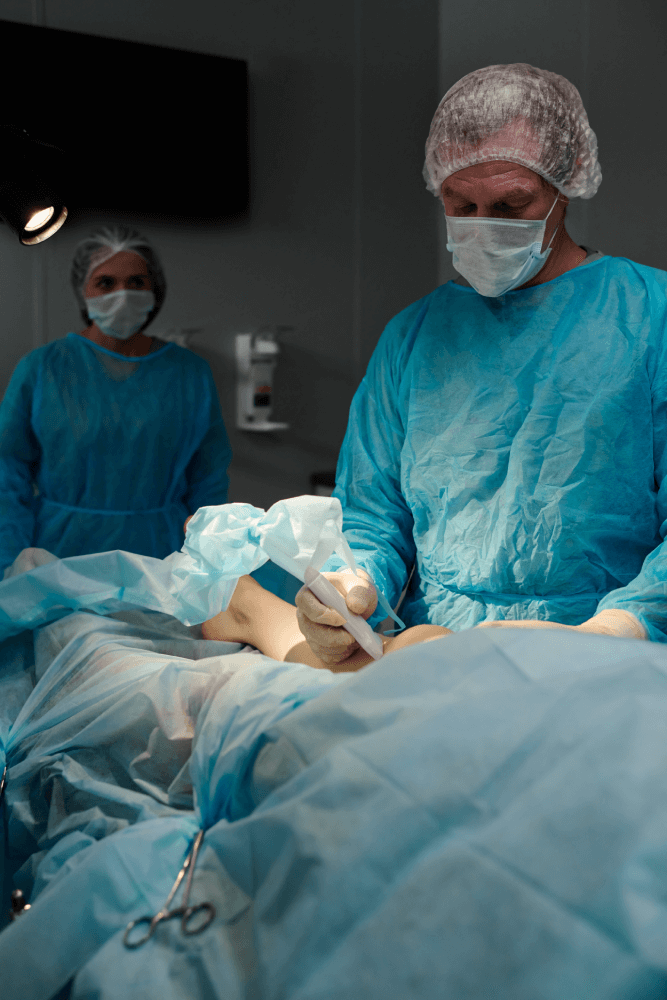
Once the anaesthetic has been successfully established, your surgeon will position you on the operating table, and you will be moved into the operating theatre.
Your skin will be cleaned using an antiseptic solution which contains a dye. This may stain your skin for a few days. Clean drapes will be applied to ensure sterility is maintained throughout the procedure.
The goal of the operation is to place the implants in the correct position and orientation in order to relieve pain, restore activity and ensure that the implants last a long time. It is expected that your first-time knee replacement will last you 20+ years.
The incision is made on the front of the knee and the knee exposed by moving the kneecap to the side. The thigh bone and shin bone making up the joint are shaped in the correct orientation using jigs and instruments to ensure pain relief and good function. The kneecap is assessed to see if it needs to be replaced.
The wound is closed using sutures under the skin and glue. You will not have any sutures to remove after the wound has healed.
Early Post-Operative Period
You will spend 30 minutes in the post-operative recovery room and return to the ward once you are fully awake.
At this stage you may have and oxygen mask to help your breathing and a drip in your hand. This will stop as soon as you are able to eat and drink.
You will walk on the day of your operation with the help of the physiotherapists.
You will have an X-Ray examination of your knee on the next day and further physiotherapy help to get you more mobile. You will be able to go home when you can go up and down stairs.
This usually takes one or two days.
After Discharge
You will go home with written instructions to follow at home to ensure safe and speedy recovery. You will be contacted by physiotherapists who will assess your progress and your need for need for further exercises.
It takes around 6 weeks for you to notice a big improvement in your knee.
Follow Up
You will be seen by your surgeon in a follow-up clinic 6 weeks after your operation. This is to ensure that you are progressing with your mobilisation and that your wound has healed.